
Pre-Dynastic Egypt
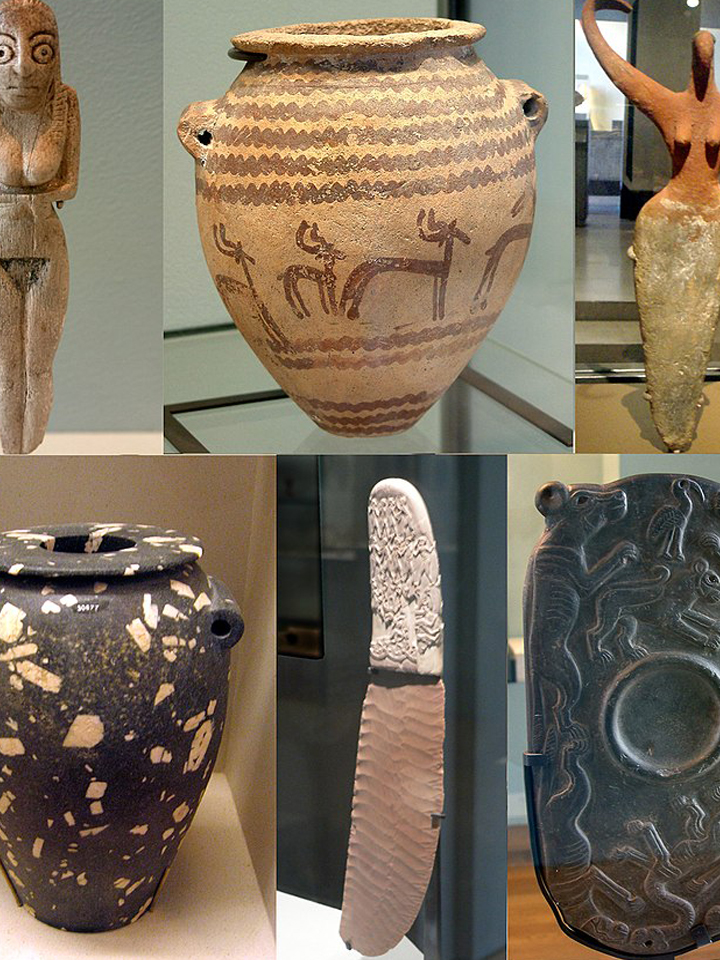
Prior to the formation of dynasties, the people who would later become Egyptians were likely nomadic, or they had no permanent settlements. Little is known about these early cultures, mainly because they only developed writing systems near the end of this period – and not all of what they did write has been deciphered.
While the structure of these early societies remains a mystery, archaeological evidence suggests that when natural changes to the climate began to form the Sahara, it encouraged permanent settlement around the Nile. In a process known as the inundation, the Nile would reliably flood and recede every year, leaving behind dark, nutrient-rich mud. Egyptians could farm this land, so they began to build permanent structures, grow barley, and raise cattle, goats, and pigs.
The Egyptian word kemet, meaning “Black Land”, was used to refer to the nutrient-rich silt left behind in the inundation. This farmable land around the Nile was so relevant to the Egyptians that it was the word they used to refer to the nation of Egypt. Conversely, the desert was deshret, or “Red Land”.

At-A-Glance
- The word kemet, meaning “Black Land”, was the Egyptian name for Egypt, in reference to the nutrient-rich soil left by the Nile's annual inundation.
- Senet, the world’s oldest known board game, was invented around 3500 BCE.