
Middle Kingdom Egypt
Dynasty XI-XIII
After nearly 150 years of instability, Egypt was once again unified, and the empire entered the Middle Kingdom.
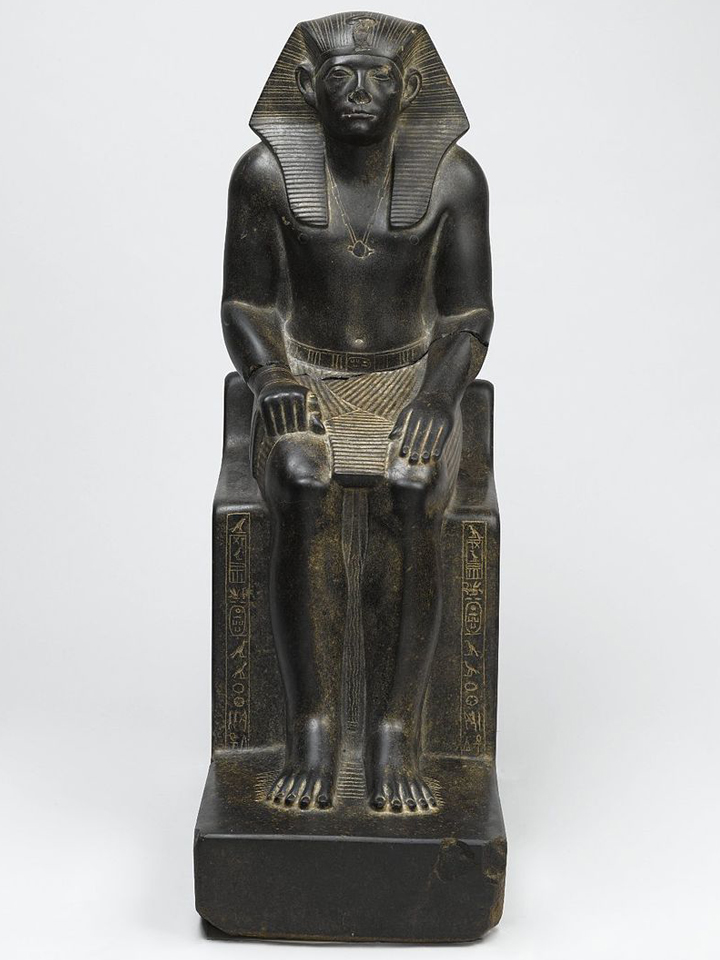
In many ways, the Middle Kingdom tried to copy the structure of the Old Kingdom’s government. It still allowed for local governors to hold power, but ultimately centralized the government; the pharaoh Mentuhotep II would personally visit local leaders and make sure he had earned their loyalty. Additionally, Middle Kingdom artwork depicted their pharaohs more realistically, and royal statements tended to address the people directly, from the pharaoh himself. This seems to be in an effort to connect with the everyday Egyptian.
The pharaoh Amenemhat I moved the capital from Thebes to a city called Itjtawy. The ruins of the city have never been found, but it is known to have been located more equally between Upper and Lower Egypt. Itjtawy remained the capital for the next 300 years.
It was also Amenemhat I who introduced the concept of a co-regent by elevating his son to the role of king. The pair ruled together, with equal power, and when Amenemhat I was assassinated, his son already had a firm claim on the throne. The practice of co-regency continued until the end of pharonic Egypt.
In the course of these developments, public works projects started up once again, as did mining and quarrying. Trade routes were reestablished with Syria and Nubia, and the border was once again secured. The government focused not just on expansion, but on building projects, defense, agricultural production, improvements to cities and roads, and the development of art and literature. Much of the Egyptian population farmed the land in the countryside, and reaped the benefit of an intricate irrigation system that was installed at Faiyum.
Ultimately, invasions from the north and the south, as well as another climactic event led to the abandonment of the capital and the collapse of the Middle Kingdom.

At-A-Glance
- Once again unified, Egypt is ruled by a pharaoh, who controls less-powerful local leaders
- Art and literature flourished, as well as many public works projects
- The pharaoh Amenemhat I introduced the concept of co-regency by ruling alongside his son