
Victorian Obsession & King Tut
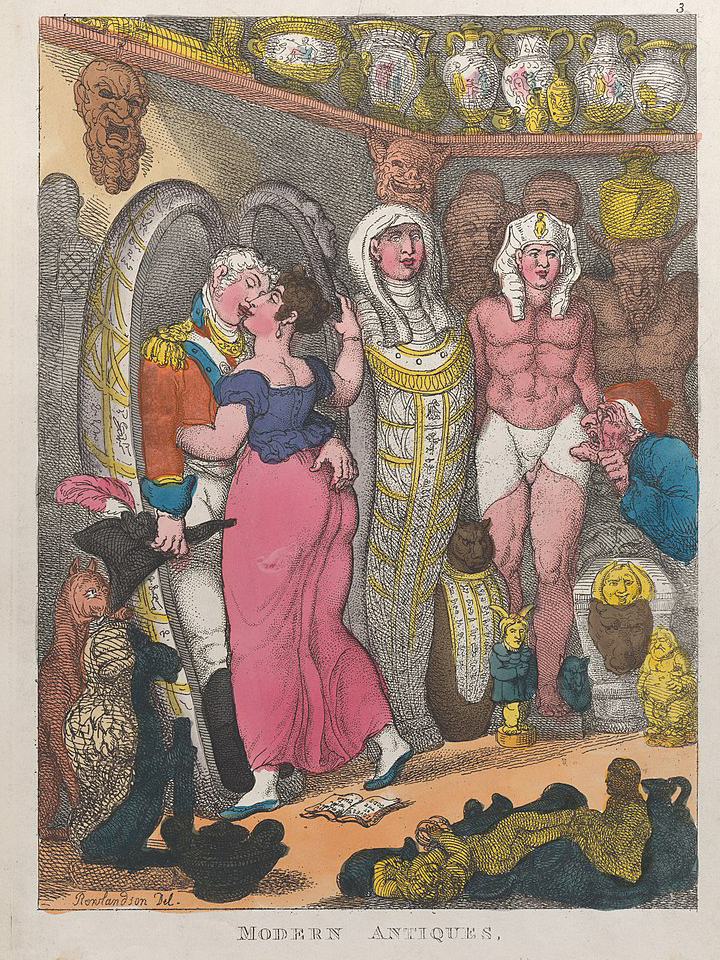
On the heels of the decipherment of the Rosetta Stone came a rise in public interest in Egypt from everyday Europeans. It became popular to include Egyptian references in art, architecture, music, literature, and more—even if those references weren’t historically accurate.
For centuries, Egypt was perceived as a mysterious and mystical society, leading to some bizarre practices. Mummies were often crushed to dust and added to medicines and paints. Regularly, Victorians would host “unwrapping parties”, where they would purchase a mummy for the sole purpose of removing its bandages in front of an audience.
Authors like Louisa May Alcott and Edgar Allan Poe incorporated Egypt into their fictional stories, and in 1892, the author Sir Arthur Conan Doyle, best known for Sherlock Holmes, wrote the short story “Lot No. 249,” which helped to popularize the trope of a mummy coming back to life.
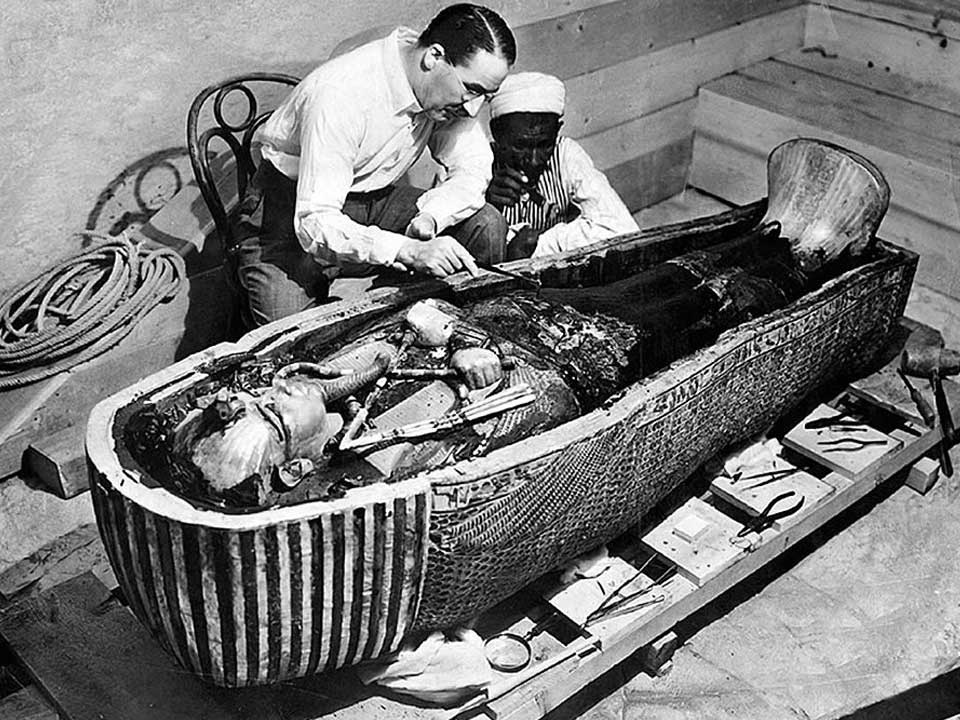
Then, in 1922, just as the obsession died down, Howard Carter opened the previously-undisturbed tomb of Tutankhamen—King Tut. It was full of golden treasures, untouched artwork, and, most importantly, the mummy of a pharaoh. Not only did the tomb seem to confirm public perception of Egypt as a land of riches, but it also came with intrigue.
In 1923, just months after the opening of the tomb, the man who funded Carter’s work, Lord Carnarvon, died unexpectedly. His death, as well as several others, was attributed to the “curse of Tut’s tomb.” No evidence of a curse existed in the tomb, but still, the myth persists in popular culture.
In fact, when the mummy of an unidentified Egyptian woman appeared in St. Petersburg in 1922, not only did the St. Petersburg Times suggest that she might be the wife of King Tut, but when Lord Carnarvon died, they speculated that she too might be cursed.

At-A-Glance
- After the deciphering of the Rosetta Stone, interest in Egypt grew into an obsession among everyday Europeans.
- Egypt began appearing in literature; Sir Arthur Conan Doyle, the creator of Sherlock Holmes, is credited with creating the trope of a mummy coming back to life in his short story, “Lot No. 249”.
- Howard Carter, with the funding of Lord Carnarvon, opened King Tut’s tomb in 1922, leading to a renewed fervor for all things ancient Egypt, which was only spurred by the sudden, inexplicable death of Lord Carnarvon.