
Third Intermediate Period
Dynasty XXI-XXV
While it is viewed as being less chaotic than the First and Second Intermediate Periods, this era did come with political decline and instability. The borders of Egypt once again shrank as a series of droughts made food scarce. Once again, Upper and Lower Egypt separated.
In the north, the capital moved to the city of Tanis, which was located in the Nile Delta, though as other local rulers gained power, this would change. Perhaps the most interesting part of this was that the some of the pharaohs that ruled here were buried in coffins made of silver.
In the south, the High Priests of Amun ruled as kings in a theocracy. At one point, they made the decision to mine the tombs in the Valley of the Kings. The valuables were taken as income and the mummies were stashed elsewhere. This only one of the reasons why it is so difficult to find an untouched Egyptian tomb today.
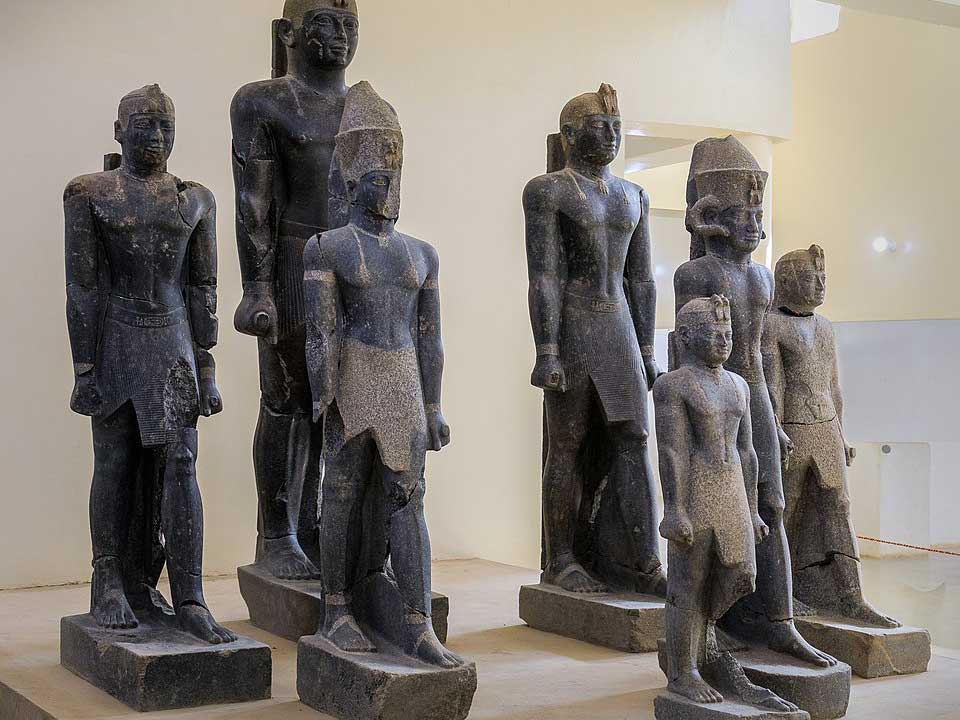
Unlike previous intermediate periods, Upper and Lower Egypt did not seem interested in warring against one another, and there is even evidence of diplomatic intermarrying. Then the Kushite Kingdom in the south encroached on Egyptian territory, eventually taking the throne of Upper Egypt. In the north, the nearby Assyrian Empire assumed control.

At-A-Glance
- While not as chaotic of a period, Upper and Lower Egypt separated once again
- The power center of Lower Egypt shifted, while Upper Egypt seemed to center on the High Priests of Amun in Thebes
- For a time, the Kushite Kingdom took the throne in the south and the Assyrian Empire took the one in the north